Red wine at a dinner party. Coffee on a Monday morning. A child's texta that found its way to the lounge room floor. Every household has its stain story — and most of us have at least one carpet that carries the evidence. Some stains respond well to a quick blot and a damp cloth. Others seem to laugh at your best efforts and sink deeper with every attempt.
Understanding why certain stains are so difficult to remove is the first step to dealing with them effectively. This guide covers the ten most challenging carpet stains, what makes each one so stubborn, the best first-response technique, and when it's time to call in a professional.
Act immediately. Every minute a stain sits in carpet fibres, it is bonding more deeply with the material. Blot — never rub — from the outside edge inward to prevent spreading. And never use boiling water, which can permanently set protein-based stains like blood and egg.
Why Some Stains Are Harder Than Others
Not all stains are created equal. The difficulty of removal depends on three main factors: the chemistry of the staining agent, the type of carpet fibre, and how long the stain has been sitting.
Tannin-based stains (red wine, tea, coffee) bond to carpet fibres through a process similar to dyeing fabric — the longer they sit, the more permanent the colour change becomes. Protein-based stains (blood, egg, dairy) coagulate when exposed to heat, effectively gluing themselves to fibres. Oil-based stains (grease, makeup, butter) repel water-based cleaners entirely, which is why scrubbing with a wet cloth often makes them worse. And acid-based stains (pet urine, vomit) can actually damage the carpet fibre itself, not just discolour it.
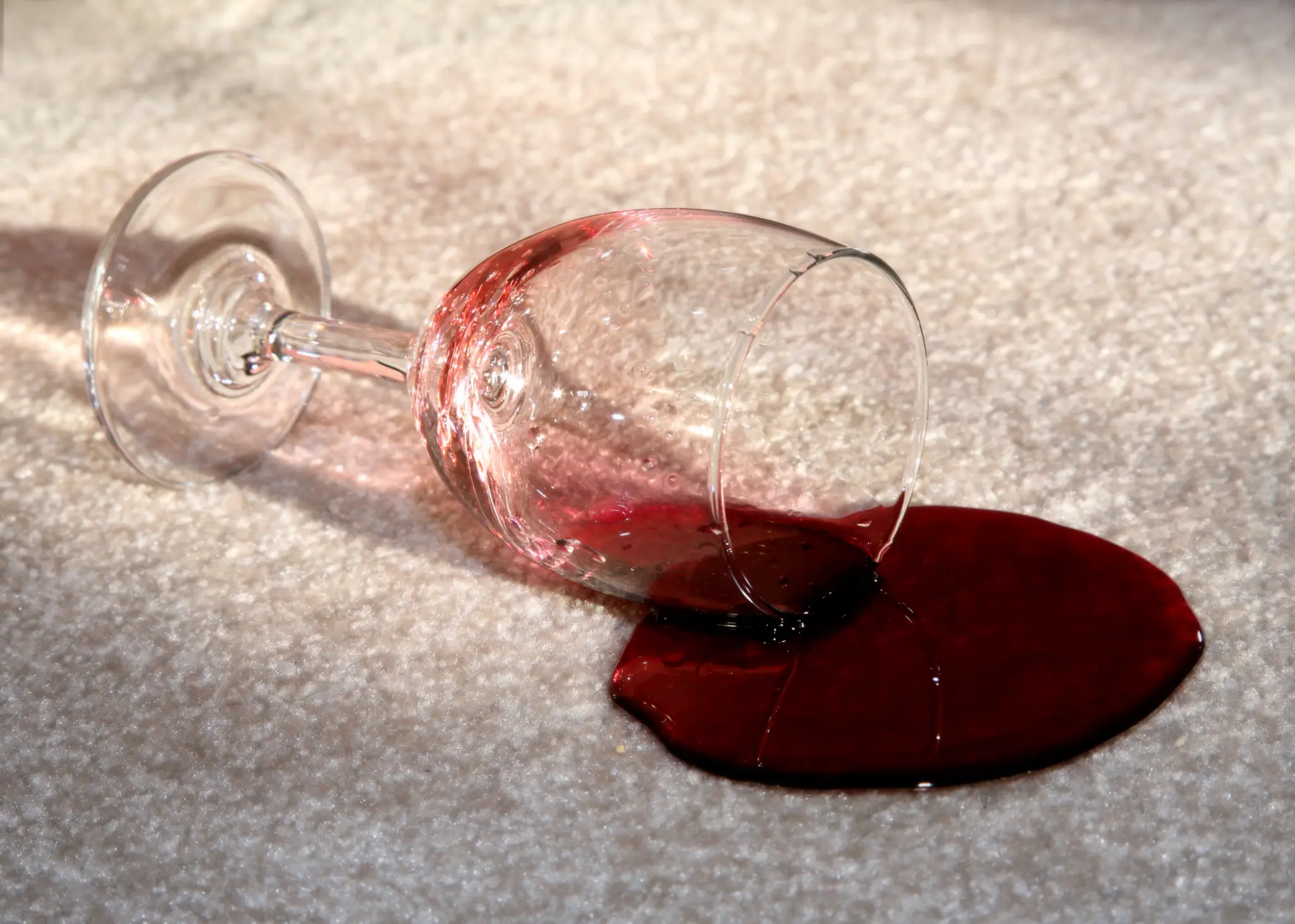
Red wine is one of the most feared carpet stains — its tannins begin bonding to fibres within minutes of contact.
The 10 Toughest Carpet Stains
Red Wine
Red wine contains tannins and natural dyes that begin bonding to carpet fibres almost immediately. The longer it sits, the more it behaves like a permanent fabric dye. Cold water and blotting are your first line of defence — never use hot water, which accelerates the bonding process. Club soda can help lift fresh spills, but set red wine stains almost always require professional treatment with enzyme-based or oxidising cleaners.
Coffee & Tea
Both coffee and tea are tannin-rich and leave a distinctive yellow-brown stain that deepens over time. The sugar and milk often added to these drinks create an additional sticky residue that attracts dirt long after the visible stain appears clean. Blot immediately with cold water, then apply a small amount of dish soap diluted in water. Rinse thoroughly — soap residue left in the carpet will attract grime and cause the area to re-soil faster than the surrounding carpet.
Pet Urine
Pet urine is deceptively damaging. Fresh urine is acidic, but as it dries and bacteria break down the uric acid, it becomes highly alkaline and produces the characteristic ammonia odour. The uric acid crystals that remain after drying are essentially insoluble in water — which is why standard cleaning products only mask the smell temporarily. Worse, the alkaline residue can permanently alter the dye in carpet fibres, leaving a bleached or discoloured patch. Professional treatment with an enzyme-based product like Chem-Dry's P.U.R.T.® is the only reliable solution for set urine stains.
Blood
Blood contains proteins that coagulate rapidly when exposed to heat — which is why using warm or hot water on a blood stain is one of the worst things you can do. Always use cold water only. Blot the stain gently and apply a small amount of hydrogen peroxide (test on a hidden area first, as it can bleach some carpets). For dried blood, the proteins have already bonded to the fibres and professional cleaning is usually required to achieve full removal.
Ink
Ballpoint ink contains oil-based pigments that are highly resistant to water-based cleaners. Permanent marker is even more challenging — as the name suggests, it is designed to resist removal. Rubbing alcohol (isopropyl alcohol) is the most effective DIY treatment for fresh ballpoint ink: apply to a clean cloth and blot, never rub. Printer ink and permanent marker almost always require professional solvent-based treatment. Avoid using hairspray, which was once a popular remedy but leaves a sticky residue that causes rapid re-soiling.
Grease & Cooking Oil
Oil and water do not mix — which means water-based carpet cleaners are essentially useless against grease stains. Dry-cleaning solvent or a small amount of dish soap (which is designed to cut through grease) applied carefully and blotted away is the best DIY approach. The key is to use as little liquid as possible to avoid spreading the stain. Baking soda applied to a fresh grease stain can absorb some of the oil before it sets — leave it for 15 minutes, then vacuum before attempting any liquid treatment.
Vomit
Vomit is a compound stain — it contains proteins, acids, bile pigments and often food dyes, all of which require different treatments. Remove as much solid material as possible first using a spoon or blunt knife, working from the outside in. Blot the remaining liquid, then apply a solution of cold water and a small amount of bicarbonate of soda to neutralise the acid. The lingering odour is caused by the same bacterial breakdown process as pet urine, and enzyme-based cleaners are the most effective treatment for both the stain and the smell.
Chocolate
Chocolate is a combination stain — it contains fat, protein and tannins, each of which requires a different approach. Allow the chocolate to dry and harden completely before attempting removal, then scrape off as much as possible. Applying warm (not hot) water with a small amount of dish soap can help lift the remaining residue. The fat component is the most persistent element and may require a solvent-based cleaner for complete removal. Never rub chocolate into the carpet — it will push the pigment deeper into the fibres.
Cordial & Soft Drink
Brightly coloured cordials and soft drinks contain artificial food dyes that are specifically designed to be colourfast — meaning they resist fading and, unfortunately, resist removal. The sugar content also creates a sticky residue that attracts dirt. Blot immediately with cold water and a small amount of dish soap. The longer a cordial stain sits, the more the dye bonds to the carpet fibre, and many set cordial stains — particularly red and purple varieties — are permanent without professional treatment.
Makeup & Lipstick
Most makeup products are oil-based and highly pigmented — a combination that makes them extremely resistant to water-based cleaning. Foundation, lipstick and mascara all require a solvent-based approach. Apply a small amount of rubbing alcohol or dry-cleaning solvent to a clean white cloth and blot gently. Avoid scrubbing, which will spread the pigment and push it deeper into the carpet pile. Waterproof makeup products are particularly challenging and often require professional treatment to remove completely.
Your First-Response Guide
The actions you take in the first few minutes after a spill determine whether the stain can be fully removed or whether it becomes a permanent fixture. The table below summarises the correct first-response technique for each stain type.
| Stain Type | Water Temperature | First Action | Avoid |
|---|---|---|---|
| Red wine, cordial, tea, coffee | Cold only | Blot immediately, work outside-in | Hot water, rubbing |
| Blood, egg, dairy | Cold only | Blot with cold water; hydrogen peroxide for blood | Any warm or hot water |
| Pet urine | Cold | Blot liquid, apply enzyme cleaner | Steam cleaning over urine |
| Grease, oil, makeup | N/A — avoid water | Baking soda to absorb, then dry solvent | Water-based cleaners |
| Ink, permanent marker | N/A — avoid water | Rubbing alcohol on a clean cloth, blot only | Hairspray, scrubbing |
| Vomit, chocolate | Cold | Remove solids first; bicarbonate of soda for odour | Rubbing, hot water |
Over-wetting the carpet is one of the most frequent DIY cleaning errors. Excess moisture soaks through to the carpet backing and underlay, creating the ideal conditions for mould growth and causing the stain to wick back to the surface as the carpet dries — often appearing larger than the original spill.

A professionally cleaned carpet is not just visually cleaner — it contains significantly fewer bacteria, allergens and residual chemicals than carpets cleaned with conventional steam methods.
When DIY Is Not Enough
There are four situations where professional treatment is the only realistic option for full stain removal:
- The stain has been sitting for more than a few hours. Once a stain has dried and set, the chemistry changes significantly. Tannin stains begin to behave like permanent dyes; protein stains coagulate and bond to fibres; uric acid crystals form in pet urine stains. DIY products are generally not formulated to reverse these chemical changes.
- You have already attempted DIY treatment. Multiple cleaning attempts — particularly with the wrong products — can spread the stain, push it deeper into the carpet pile, or leave a residue that makes professional removal harder. If your first attempt has not worked, stop and call a professional before making it worse.
- The stain covers a large area. Large stains require even application of cleaning agents and controlled extraction of moisture — both of which are difficult to achieve with household equipment. Uneven treatment often results in a tide mark around the cleaned area.
- The stain involves pet urine or vomit. These stains penetrate through the carpet to the underlay and subfloor. Surface cleaning addresses only the visible portion of the stain — the odour-causing bacteria and uric acid crystals in the underlay will continue to produce smell and can cause the stain to reappear. Professional treatment reaches the full depth of the contamination.
Why Chem-Dry's Approach Is Different
Most conventional carpet cleaners use a high-pressure hot water extraction method — commonly called steam cleaning — that floods the carpet with large volumes of water and detergent. While this can be effective for general soil removal, it has significant limitations for stain treatment: the high pressure can push stains deeper into the pile and backing, the heat sets protein-based stains, and the excess moisture creates ideal conditions for mould and bacteria growth in the underlay. Carpets cleaned by steam methods typically take 1–2 days to dry fully.
Chem-Dry's carbonated cleaning solution works differently. The carbonating action lifts dirt and staining agents to the surface of the carpet fibres, where they can be extracted without the need for high-pressure flooding. The process uses approximately 80% less water than steam cleaning, which means carpets dry in 1–2 hours rather than 1–2 days — dramatically reducing the risk of mould and re-soiling. For specialist stains, Chem-Dry technicians carry a range of targeted treatments including enzyme-based products for protein and urine stains, solvent-based products for oil and ink stains, and oxidising agents for tannin-based stains.

Pet owners face a unique stain challenge — urine and vomit penetrate through carpet to the underlay, requiring professional treatment that reaches the full depth of contamination.
Protecting Your Carpet After Cleaning
Once a stain has been professionally removed, applying a carpet protector significantly reduces the risk of future staining. Chem-Dry's Powerguard Protector creates an invisible barrier around each carpet fibre, giving you more time to blot up spills before they penetrate to the fibre core. It also reduces the amount of soil that bonds to the fibres during normal foot traffic, making your next professional clean more effective.
Carpet protector is particularly valuable in households with children, pets, or in high-traffic areas such as hallways and lounge rooms. It does not change the look or feel of the carpet and is completely safe for children and pets once dry.
Summary: The Rules of Stain First Aid
- Act immediately — the first 60 seconds matter more than anything else.
- Blot, never rub — rubbing spreads the stain and damages carpet fibres.
- Work from the outside edge inward — to prevent the stain from spreading.
- Use cold water for protein and tannin stains — heat sets them permanently.
- Use as little liquid as possible — over-wetting causes mould and wicking.
- Match the cleaner to the stain type — water-based cleaners will not touch oil-based stains.
- Know when to stop — if your first attempt has not worked, call a professional before the stain sets further.
Stain You Can't Shift? We Can Help.
Chem-Dry Action has been removing Sydney's toughest carpet stains since 1993. Our technicians carry specialist treatments for every stain type — and if we can't remove it, we'll tell you honestly before we start.
Get a Free Quote